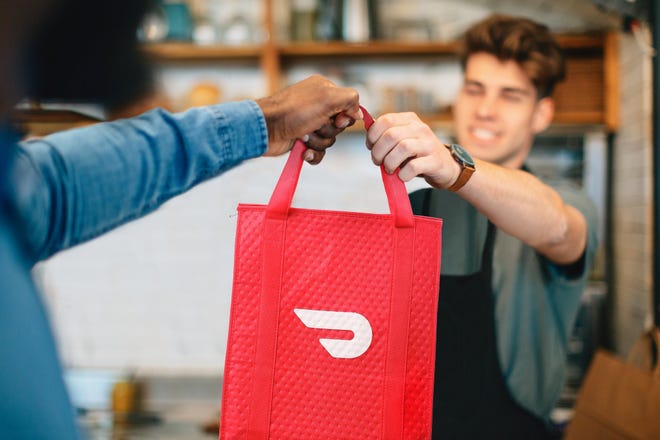
SCHENECTADY, NY (NEWS10) — Mohawk Honda and Mohawk Chevrolet kicked off the season of giving by donating to two local food pantries, as the rise in food prices are fueling an influx of demand for food donations across the Capital Region. Mohawk Auto Group partnered with Schenectady Inner City Ministry and the Wilton Food Pantry to provide non-perishable food to families in need.
Both Schenectady Inner City Ministry and Wilton Food Pantry have seen a volume increase ranging from 40 to 60% as families struggle with rising prices due to inflation. The current volume of families that use these services is double that seen during the pandemic, according to pantry representatives.
During the month of November, both dealerships held a food drive where customers and employees made donations. On Tuesday, Mohawk Honda employees dropped off those donations at Schenectady Inner City Ministry. They delivered three cars worth of nonperishable food. Mohawk Chevrolet employees visited the Wilton Food Pantry Thursday and dropped off more than two cars full of goods.
“These donations will feed 1,500 families in the community; that is roughly 400 families a week,” said Schenectady Inner City Ministry Food Justice Initiatives Manager Thomas Schofield. “This is a tremendous gift right before the holidays.”
Both dealerships received a tour around the facilities and a demonstration of the process of providing food to community members. To learn more about Mohawk Auto Group’s volunteer efforts, visit their Facebook pages.
Diet-related chronic disease is the perennial number one killer in the United States, responsible for more deaths than Covid-19 even at the pandemic’s peak. Yet we cannot manage to define this as a “crisis”. In fact, our response is lame: for decades we’ve been telling people to “eat better”, a strategy that hasn’t worked, and never will.
It cannot, as long as the majority of calories we produce are unhealthy. It is the availability of and access to the types of food that determine our diets, and those, in turn, are factors of agricultural policy. For a healthy population, we must mandate or at least incentivize growing real food for nutrition, not cheap meat and corn and soya beans for junk food.
As omnivores, humans have choices, but most choices available to Americans are bad ones. Literally: 60% of the calories in the food supply are in the form of ultra-processed foods (UPFs, or junk food), which are the primary cause of diet-related diseases. That means almost no one can make a “good” choice every time, and many of us can barely make good choices ever.
And it’s not enough to say “eat plant-based”, because most junk food is actually made from plants; the future of food, especially when you add environmental factors, is plant-centric but minimally processed – plants in close to their natural form, in diets that resemble those eaten traditionally by almost everyone in the world until the 20th century. To make that happen, we must address the functioning of the entire food system.
Government mandates around public health, environmental protection and even literacy can yield desirable results: laws or regulations around seat belts, tobacco, light bulbs, recycling, public education, have all improved public welfare. Yet no such efforts have been made in diet, where the mantra of “behavior change” stands in for good policy.
Junk food and meat are both damaging, but must be considered separately: The case for reducing the consumption of junk food rests in part on the fact that UPFs dominate the calorie supply of industrialized nations, and that diet-related diseases (diabetes, heart disease, a dozen cancers) kill around 600,000 Americans per year. (By contrast, at current rates, Covid-19 will kill 100,000 people in the US next year.) Increasingly, studies show that it isn’t simply “sugar” or “inflammation” or “saturated fat” that causes these diseases, but rather a still-to-be-determined combination of factors inherent in UPFs.
We can reduce the consumption of junk food quickly with better labeling laws, taxes on the most aggressive offenders (especially sugar-sweetened beverages) and limits on selling junk food on government properties and to minors. All of these are being explored in various municipalities in the US and even countries abroad.
While eating meat itself isn’t necessarily unhealthy, producing 10 billion animals per year – in the US alone – for consumption has devastating effects on our health and environment. Negative effects abound: astronomical land and resource use, greenhouse gas generation, antibiotic exposure and resistance and the environmental damage and carcinogenic impact of factory farms themselves. Unprocessed food from the plant kingdom is less expensive, less damaging and in countless ways healthier than industrially produced meat.
Although some are in favor of outlawing meat, it’s important to move beyond a fetishization of “animal protein” as critical to human health (it is not), and to acknowledge that meat consumption in industrial nations must be reduced. We can begin doing this by making production less damaging (Senator Cory Booker’s recent Industrial Agriculture Accountability Act would do this), which would reduce both yield and consumption.
Good moves here include restricting the barely regulated use of antibiotics in animal production; reducing monopolistic practices and supporting small farms, as well as local and regional production and consumption; limiting the (currently almost unregulated) emissions produced by factory farms; and defining and penalizing the kind of animal cruelty accepted as “routine” in factory farms.
Of course, meat production would also be curbed by encouraging the growing and consumption of what the US department of agriculture calls (without irony) “specialty products” – fruits and vegetables. The more land that produces other crops than corn and soya beans (mostly used for producing UPFs and animal feed), the less meat and junk we’ll eat. This could be accomplished first by emphasizing subsidies to encourage the growing and sale of real foods, and by making sure that those food programs receiving federal dollars promote truly plant-forward eating.
Rectifying the gross historic injustices in the US land distribution, which has historically been disadvantaged or shut out farmers of color, women and queer farmers, and encouraging new farmers to grow good food well, is also a critical step.
None of this is, as critics argue, a return to more primitive methods of farming, but a recognition that a blend of modern
We are never without butter at home, as essential to us as dried oregano, garlic, tomato sauce, capers and olive oil. My wife has been known to melt a pat of Jersey butter for flapjacks, and my children eat it like cheese on the endless rounds of toast they clamour each morning. Everyday luxury.
Butter is a staple of northern Italian cooking, used much more than in the south. Historically the fat of choice for the wealthy, its rich, mellow sweetness is in the elevated fine pasta served with white truffles, and is also crucial in risotto. What is poetically described by Elizabeth David as “a walnut of butter”, added towards the end of something home-cooked with everyday ingredients, making it the hug one needs at this time of year.
Pollo alla cacciatore
An Italian classic, this can be heaped on a bed of marigold-yellow polenta – an opportunity for more lashings of butter. It would also work well with greens and bread on the table to mop up the juices. Serves 4
chicken 1, small (roughly 1 kg) butter 90g celerywith leaves 3 sticks leek 1,large garlic 2cloves green olives 12 rosemary 3sprigs bay 4leaves passata 200ml white wine 250ml salt and black pepper
Using a good knife or scissors, cut the backbone out of the chicken. Turn it upside down and cut the chicken in 2 between the breasts. Remove the wings and thighs and separate them from the drumsticks. Cut each breast in 2. (Alternatively, ask your butcher to joint the chicken for you.) Season with salt and black pepper.
Melt the butter over a medium-high heat in a wide, lidded pan. When it is foaming, add the chicken, skin side down. Fry, gently crackling, for 8 minutes, turning from time to time until golden brown. While this is happening, chop the celery and leek into 2cm pieces. Peel and then add the garlic with the olives into the crackling butter in a space between the chicken. Fry for a further minute or 2.
Add the herbs and vegetables and mix them through – the butter will quieten down at this point. After 3 minutes, add the wet ingredients, incorporate and cover. Cook over medium low heat for 35 minutes, turning and basting halfway through.
Porcini and saffron risotto
Deep and rich in flavour: porcini and saffron risotto. Photograph: Romas Foord/The Observer
There is a strong argument that porcini makes the very best risotto. The luxurious lick of saffron, along with butter and parmesan, highlights their depth of flavour. Use powdered saffron if you like it or omit it altogether if you don’t have any. Serves 6
dried porcini 15g saffron threads a pinch celery with leaves ¼ of a head red onions 1, small garlic 1 cloves butter 80g olive oil risotto rice 400g white wine 1 large glass stock 1.5 liters (chicken, meat or vegetables) parmesan 60g, grated salt and pepper
Soak the porcini in a cup of boiling water and, separately, the saffron in a couple of tablespoons. Reserving any leaves, finely chop the celery along with the onion and garlic. Warm the stock.
Melt half the butter with a little olive oil in a saucepan and sweat the vegetables with a pinch of salt over medium heat until soft. Reserving the water, drain and chop the porcini and add to the pan. After 3 minutes, add the rice and continue to gently fry, stirring for a minute or until all the grains are hot. Turn the heat up, add the saffron in its water and all the wine. Stir well as the wine evaporates. Once the liquid has evaporated, add the mushroom water, continuing to stir. Now it’s time for the stock. Add ladle by ladle, stirring and allowing for the last ladle to be absorbed before adding the next one.
Continue cooking until the rice is to your liking. Slightly al dente is the best. The whole process should take about 25 minutes. Turn off the heat. Check the seasonings. Complete it by stirring in the rest of the butter, parmesan and chopped celery leaves. Cover and allow the glossy rice to rest for 2 minutes before serving.
Celeriac, fennel and squash
A comforting braise: celeriac, fennel and squash. Photograph: Romas Foord/The Observer
A slightly aniseed, comforting mix of braised autumn vegetables. This works as well with a savory centrepiece as it does as the centrepiece itself. Serves 4
fennel 3 bulbs (about 500g) celeriac 350g winter squash 300g garlic 5 cloves butter 50g parsley or marjoram ½ a bunch red wine vinegar ½ tbsp sea salt and blackpepper
Cut the fennel into 3cm wedges. Peel the celeriac and winter squash and cut both into 2cm slices. Peel and cut each garlic in half.