Pepsi wants you to drink soda mixed with milk this holiday season


New York
CNN Business

‘Tis the season to mix milk into your soda. According to Pepsi, however.

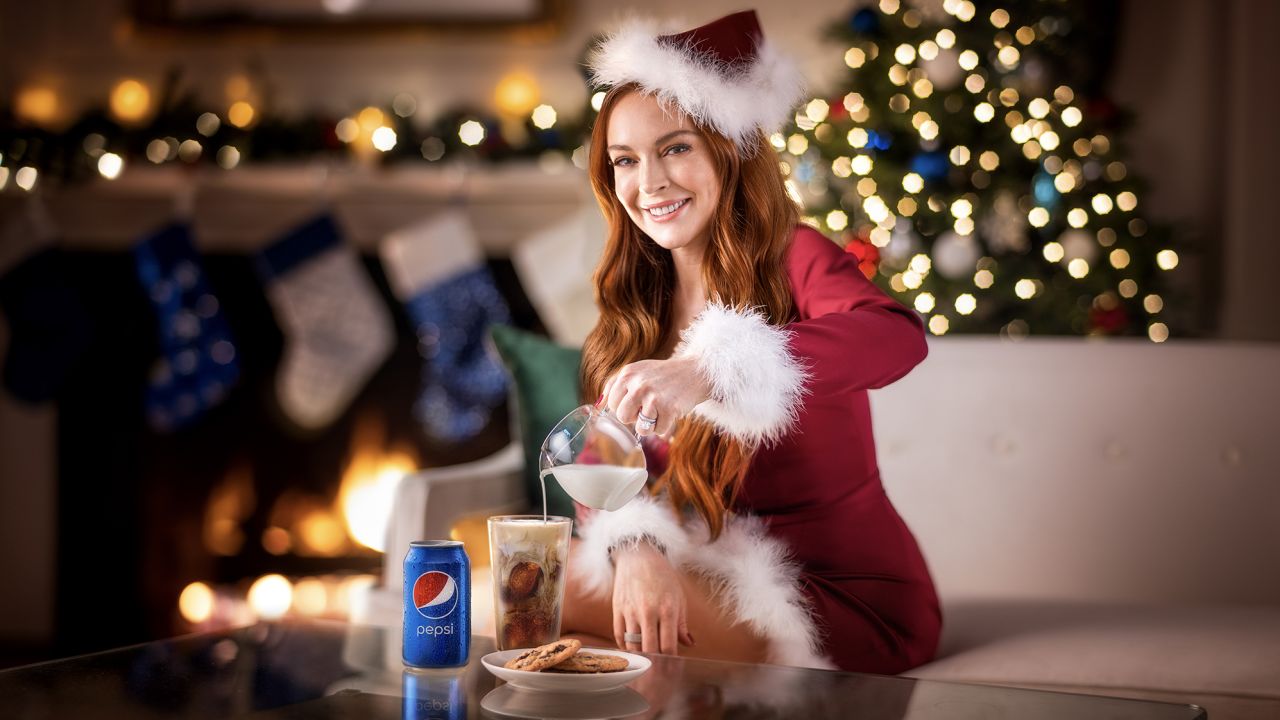
Pepsi launched a Thursday campaign encouraging customers to try the combination and use the hashtag #PilkandCookies (as in Pepsi plus milk) to showcase their Santa-friendly concoctions. Those who participate in the online challenge running through Christmas Day will have the chance to win cash.

“Combining Pepsi and milk has long been a secret hack among Pepsi fans,” said Todd Kaplan, Pepsi’s chief marketing officer, in a statement about the campaign.

Pepsi is now publicizing the mix as its spin on “dirty soda,” a popular TikTok trend that combines soda with syrup and cream. Companies like PepsiCo (PEP) pay attention to what’s happening on TikTok, and often look for ways to get in on trends as a way to stay relevant to young consumers.

“With the rise of the ‘dirty soda’ trend on TikTok and throughout the country, we thought Pilk and Cookies would be a great way to unapologetically celebrate the holidays,” said Kaplan.

Lindsay Lohan thinks you should try Pilk.

To make the campaign even trendier, Pepsi tapped Lindsay Lohan, star of the Netflix (NFLX) Christmas movie “Falling for Christmas,” to promote the combination.

Pepsi is recommending a number of recipes for those who want to go beyond just Pepsi and milk, perhaps hoping to launch their own viral combination.

A handful of those recipes include the Naughty & Ice, which is Pepsi with one cup of whole milk, one tablespoon of heavy cream and one tablespoon of vanilla cream, plus Pepsi; the Cherry on Top combines Pepsi Wild Cherry with half a cup of 2% milk, two tablespoons of heavy cream and two tablespoons of caramel creamer; and the Snow Fl(oat) is Pepsi Zero Sugar and half a cup of oat milk with four tablespoons of caramel creamer.

The soda cocktails are relatively new to TikTok — but they have been popular for years in Utah, which has a high concentration of Mormons, some of whom abstain from alcohol and hot beverages.

TikTok discovered the drink after Gen-Z pop star Olivia Rodrigo posted a photo of herself holding a Swig cup in December last year, sending fans in search of answers about the Utah-based chain. Swig, which calls itself “home of the original dirty soda,” has been around since 2010 and serves a wide array of the carbonated mash-ups.

The trend quickly took off, Eater reported in April, saying “TikTok is now repeated with more than 700,000 mentions of the #dirtysoda hashtag, most of which accompany videos of creators showing viewers how to make their own dirty sodas at home.”

Viral food sensations have inspired companies to capitalize on trends, sometimes even creating new products based on what they see.

In September 2020, for example, Dunkin’ partnered with TikTok star Charli D’Amelio on a limited-time drink called The Charli — cold brew with whole milk and three pumps of caramel swirl — inspired by D’Amelio’s favorite order. On launch day, Dunkin’ hit a record for daily active app users. And last year, Starbucks experimented with selling the TikTok-popular Iced Matcha Latte with Chai on social platforms.

Kraft Heinz (KHC) this year launched Dip & Crunch, a burger dipping sauce packaged with “salty potato crunchers.” The idea is for people to dip a burger or sandwich into the sauce, then into the crunchers, and then take a bite — something that had apparently been trending on TikTok with some loving the trend and others questioning it.

“For us to hear that debate online, then bring it to life, is an example of how we’re listening,” Sanjiv Gajiwala, then Kraft Heinz North America’s chief growth officer, told Fast Company in April. Now, you can find videos of TikTok influencers testing out the product in ads, and others reviewing it for their followers.

Read More

Lake Bell Says She’s A Better Parent On Weed Edibles

You know Lake Bell. But do you know Lake Bell…on weed???

Her kids definitely do — at least, according to some comments she gave at a panel sponsored by the cannabis drinks brand Cann (via People).

During the panel, Lake said that she “can’t get through the holidays without” cannabis — and that she’s found that it improves her parenting skills, too.

“I am straight up a better parent when I’m just two Canns in,” Lake said. “I’m, like, on their level.”

Yes, Lake’s comments sound suspiciously like sponge — like, “two Canns”? Who the hell says that unless they’re, like, at an event sponsored by Cann? But it does also sound like she really does enjoy getting stoned and being around her kids.

“I’m just like, ‘That is a fucking crazy dinosaur!'” Lake explained while taking the audience on a journey into her deeply stoned mind.

“Like, ‘Let’s get on the ground right now and be fucking crazy dinosaurs, let’s open some presents. Fuck it.’ I became literally a kid.”

I mean, sounds fun — but I’m staying out of taking a side on this one; it’s none of my business. Feel free to go off in the comments, though.

Read More

Netflix’s Drink Masters Is a Revealing Look at Modern Bartending

One of the most emblematic scenes of Drink Masters, a cocktail-making competition series that debuted on Netflix earlier this year, could double as a cruel childhood prank on an unsuspecting palate. Into a stainless steel tabletop still went a mash of black olives—the foamy, drab gray sludge looking not unlike the burnt sugar that seeps out of a well-roasted sweet potato—and what emerged from the distillation tubes was a liquid as clear as crystal . It was the backbone ingredient to one of the most interesting cocktails made in the series: “Not All Those Who Wander Are Lost,” a punch composed of rhum agricole, olive tapenade distillate, jerk spices and citrus.

Conceptualized by Tao, a Tunisian-born traveling bartender based in Montreal, the cocktail, and every shot documenting its construction, was precisely what I was hoping to see out of a competition series dedicated to the murky realms of mixology. Tao makes a fairly left-field connection based on the breadth of his globetrotting: The robust, earthy funk of olives provides structure to the similarly funky flavors of rhum agricole. “There’s no connection between olives and the Caribbean,” Tao says, albeit incorrectly, given the olive’s prominence in Cuban, Puerto Rican and Dominican cuisines. “There are olive notes that I personally pick up in those types of rums.”


With his wide-brimmed hats, septum piercing and a penchant for making even the wildest flavor combinations feel almost pragmatic in composition, Tao looks the part of a newborn star. That alone is noteworthy. While countless celebrity chefs have been made through televised exposure over the decades, even the best bartenders have stared through a glass darkly—their influence may cross over, but their names and visas never quite materialize in a mainstream context. Drink Masters’ contribution to modern bartending is unlikely to be its ability to churn out celebrities, or even offer an accurate depiction of the upper echelons of mixology. The question, perhaps, is whether it can give shape to the bartender as a keenly creative force, and not an object of ridicule.

Suddenly we’re transported back to the mid-aughts, to the heart of what made the molecular mixology trend so repulsive, even though the contestants themselves have clearly moved beyond that ethos.

Drink Masters isn’t the first drinks-based competition produced for video, but it might as well be. In 2008, Absolut sponsored a shoddy Top Chefs knockoff called On the Rocks: The Search for America’s Top Bartendersproduced by LXTV, the company responsible for those lifestyle and human interest shows that air on NBC on Saturday afternoons. It was an online exclusive back then, but if it weren’t for a trailer available on YouTube and an IMDb entry, you’d be forgiven for thinking it never happened. One of the few things Drink Masters and On the Rocks have in common is the same $100,000 grand prize, despite more than a decade of inflation and an almost incomprehensible boost in production value. Alas, in a boozy competition, it’s not the competition element that requires proof of concept, it’s the mixology.

The form of Drink Masters should register as comfort food for anyone who has watched any kind of popular food programming over the past two decades: Twelve contestants compete in various themed challenges, each with an all-but-impossible time limit. Every week, one bartender is eliminated. It is a time-tested formula, and Drink Masters succeeds because it’s based on a can’t-fail template of TV-making, combined with Papa Netflix’s arsenal of the latest high-speed imaging technology to make garnishing a cocktail look like placing the finishing strokes on the ceiling of the Sistine Chapel.

And like other Netflix reality shows (eg, The Circle), there is a notable punching bag, the contestant whose book bags to be judged by its cover—and who is swiftly eliminated as a result. It’s no big spoiler to say that the first person was eliminated on Drink Masters is an Instagram influencer. Her first drink is a Margarita inspired by the Aperol Spritz. It bores judge and renowned New York bar owner Julie Reiner to tears, but it’s crushable, because of course it is; her redemptive shot to stave off elimination is a staid variation on a Negroni, because of course it is. The first send-off serves as a sort of mission statement on what the judges are not looking for, and what the show as a whole hopes to surpass.

Yet, somehow, for all the “elevation” that the judges are seeking out of the contestants, Drink Masters feels largely paint-by-numbers, lacking the specificity of vision that some of the best cooking competition shows exude. It doesn’t showcase the heartwarming charm of human foibles like The Great British Bake Off; it doesn’t have the drama or game theory of Top

Read More