If you’ve been less than satisfied with a food product or a restaurant meal lately, you’re not alone. The problem has grown to be quite common. While some consumers simply toss out a few complaints and call it a day, others have resorted to more drastic legal measures to address their grievances.
Lawsuits against food and beverage companies have gone through the roof in recent years—peaking in 2021 with a total of over 300 class action lawsuits filed. Many of these cases hold a lot of legitimacy, addressing issues such as harmful materials found in products, untrue sustainability claims, or false advertising. No, you can’t call a product “100% Natural” if it’s chock full of preservatives and artificial sweeteners.
So yes, many of these litigious claims prove to have validity. But there are always a select few that are rather gratuitous and, in some cases, downright bizarre. We all remember the woman who sued McDonald’s for coffee that was “too hot,” or when Kellogg’s faced a lawsuit for its fruitless Froot Loops.
Here are some of the craziest lawsuits brought against food companies in 2022.
RELATED: 5 Grocery Store Trends You’ll Start Seeing Everywhere in 2023
Keith Homan/Shutterstock
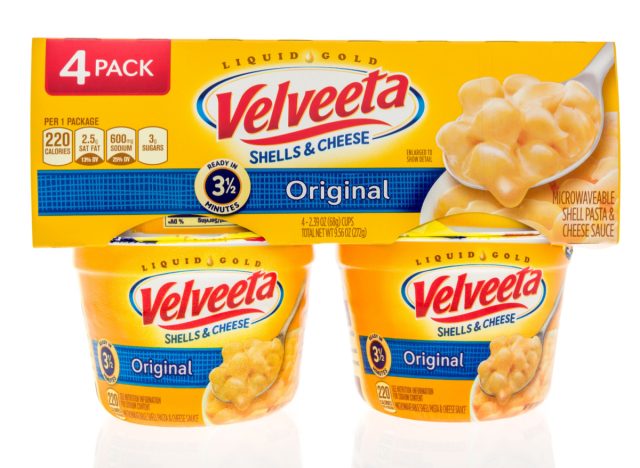
Time is certainly a valuable asset—but is a couple of extra minutes worth $5 million? According to Florida consumer Amanda Ramirez, the answer is yes. Ramirez filed a class action lawsuit against Kraft Heinz in November, claiming that the company’s Velveeta Shells & Cheese takes longer than its advertised 3.5 minutes to make. The lawsuit makes the argument that this allotted time only covers the step of microwaving the product, and other actions like opening the package and mixing together water and cheese sauce are not factored in.6254a4d1642c605c54bf1cab17d50f1e
In response, a Kraft Heinz spokesperson told CNN“We are aware of this frivolous lawsuit and will strongly defend against the allegations in the complaint.”
Billy F Blume Jr / Shutterstock
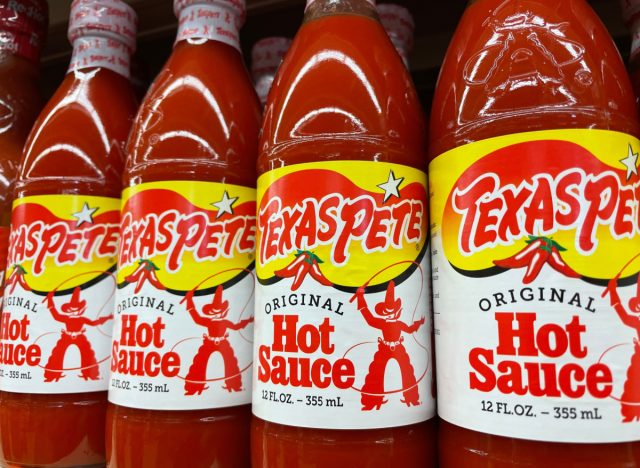
You may recall a lawsuit revolving around Barilla pasta and its non-Italian origins. Well, another very similar case popped up around the same time focused on the Texas Pete hot sauce brand.
Contrary to its name, the hot sauce is not made in the Lone Star state. It is actually crafted in Winston-Salem, NC—a fact which California resident Philip White was shocked to learn and which ultimately prompted the class action lawsuit. White says that despite the hot sauces’ Texas-style images, which include the white star from the state’s flag and a cowboy, “there is surprisingly nothing Texas about them,” and he wouldn’t have purchased the product if he had known its true origin.
While White appears to be tricked by the brand’s name and appearance, the company’s website does explain the inception of Texas Pete in detail and clearly states that its actual home is, and always has been, North Carolina. A quick peek at the product’s back label also reveals it is from North Carolina.
Blue Diamonds
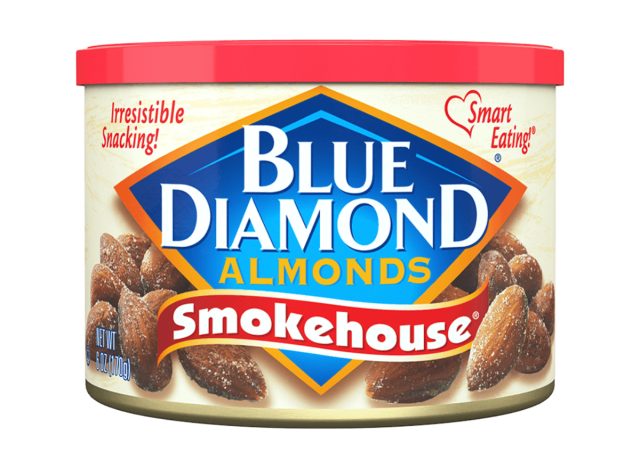
Accurate wording is everything when it comes to advertisements—a lesson that the snack company Blue Diamond was faced with earlier this year. One customer, Margo Clark of Chicago, was outraged that the company’s Smokehouse flavored almonds were in fact not produced in a smokehouse. According to Clark, since the almonds are not made through the process of using actual smoke, and instead simply include a “natural hickory smoke flavor,” they are not worthy of the name.
The filing goes on to mention that the almonds’ orange and red-colored container is misleading as it is “evocative of the colors of fire.” And, the complaint additionally argues that “foods that are not made in a smokehouse should contain a prominent statement such as ‘with added smoke flavor,’ ‘smoke-flavored’ or with ‘natural smoke flavor.'” This is certainly one consumer who is nuts about their nuts!
Courtesy of McDonald’s
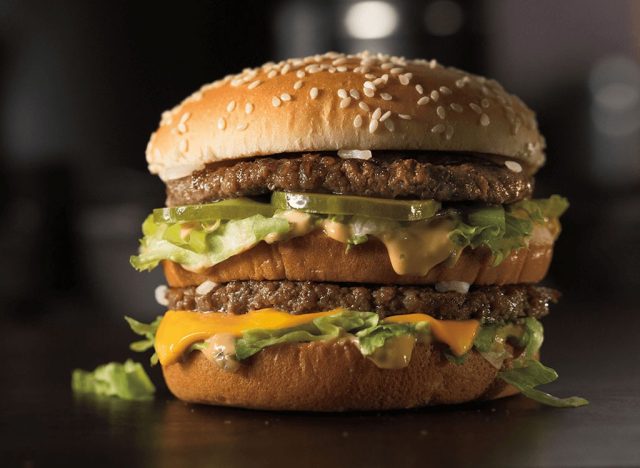
We’ve all fallen victim to something (or someone) that looks better in a picture than it does in person. And burgers are no exception. In a lawsuit filed earlier this year, New Yorker Justin Chimienti alleged that big burger chains McDonald’s and Wendy’s misrepresented their products—including popular burgers like The Baconator and the Big Mac—in advertisements.
The claim asserts that these companies photograph their products when the meat is not yet fully cooked, making them look up to 15-20% larger than in real life—a tactic which is “unfair and financially damaging” according to the plaintiff.
This case followed closely after a similar one against Burger King, putting all three of America’s top burger chains in hot water this year.
melissamn / Shutterstock
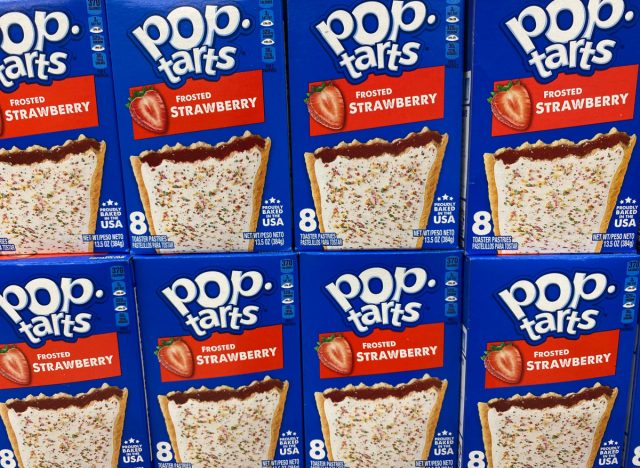
Multiple lawsuits have been filed in recent years against Kellogg’s Frosted Strawberry Pop-Tarts and their disheartening lack of real strawberries. Consumers have taken issue with the toaster pastries of other flavors as well, such as apples and pears, which they claim to be inferior to strawberries
Tucked just south of Interstate 70 near US 63, a restaurant offers more than just Mexican food in the back of a small plaza.
Known as Los Comales, the restaurant has a small store with various goods from Mexico, ranging from shampoos and laundry detergents to produce. Varying shades of red paint, bright and warm, surround the refrigerated and freezer sections. Art yet to be hung lies nearby. Beyond that is a butcher counter that offers cuts of carnitas, chorizo, carne asada, al pastor and other specialty meats.
Ismael Mendez, the manager, said that beyond the store and butcher it has, Los Comales’ Mexican recipes set it apart from other local restaurants he considers “Tex-Mex.”
“The chipotle chimichanga is one of the best; people love it,” Ismael said. “My grandma used to make those over there (in Mexico), but here, it’s different.”
Mendez learned to cook from his grandmother, using her own recipes in his kitchen. His brother, Ezequiel Mendez, owns the business. The menu includes Mexican dishes like burritos, enchiladas, tamales and other classics, ranging in price from $10 to $18. The most popular dishes among customers so far are the tacos, Ismael said.
Los Comales’ store is open daily from 9 am to 9 pm; the restaurant is open from 11 am to 9 pm The concept for setting up the business came from his relatives in Chicago, who own a restaurant and combined store.
Social media has helped Los Comales in gathering customers, specifically from Facebook groups where people share their experiences with businesses in the Columbia area, Ismael Mendez said.
“They started coming in because we have people who have started posting. We don’t know where they’re even coming from, because I guess the group is private,” he said.
Among Mendez’s favorite items on the menu is quesabirrira: tacos made from stew meat then cooked in the fat from the stew, typically topped with Oaxaca cheese.
“I want a taste of Mexico,” he said, “not a taste of here.”
While his Tulane degree in architecture came in handy with the painstaking renovation of the 1860 Greek Revival townhouse that is now Margaret Place, Trenton Gauthier’s plan isn’t just about restoring the hotel and event space to glory.
With the opening of the hotel’s cheekily named Rising Sun cafe, Gauthier’s vision extends to create a delightful space, where fresh ingredients come together for bites of nostalgic goodness.
The cafe’s team includes the father and son chef duo Matt and Jake Erickson in the kitchen. Pastry chef Violet Badflower provides baked goods with an emphasis on vegan options; and Rachel Blackstone is the lead barista behind the high-tech Decent Espresso machine. The coffee program hinges on small batch local roasters Mammoth, Cherry and Pretty Coffee.
Blackstone conjures some of its own beverages, like the spiced mocha, bright with notes of cayenne and cinnamon. Badflower, who is also a burlesque performer, bakes treats like guava cream cheese pastelitos, vegan bananas Foster muffins and brown butter chocolate chip cookies.
For now, the savory menu is compact and changes frequently with seasonal ingredients. The BEAT is Matt Erickson’s take on a BLT, combining bacon, egg, arugula and heirloom tomatoes on ciabatta with a schmear of house-made tomato onion jam.
The pulled-pork sloppy joe has a whisper of gochujang, the Korean chili pepper paste. The fried chicken sandwich is a winner, a juicy, Creole-seasoned, fried breast cutlet dressed with arugula, creamy basil aioli and, on the other side of the toasted ciabatta, a flavor-packed romesco sauce.
Beer-braised pork shoulder is used in the pulled pork breakfast hash served with eggs and cafeteria-style hash brown patties. Most dishes are $10 or under, including a diner plate with more of those crispy hash browns, toast, two eggs and andouille or bacon on the side. There’s a daily soup and a seasonal salad, currently a mix of arugula, house-marinated artichoke hearts, pickled peppers and shaved radishes tossed in a citrusy vinaigrette.
Entrees are served on pretty china, which underscores the eye-popping presentations. “There’s a lot of prep that goes into our dishes, but they come together fast,” Matt Erickson says.
Matt Erickson, who has been in New Orleans for seven years, has cooked in kitchens including Suis Generis, Green Goddess and The Saint Hotel in the French Quarter. This is only the second time he’s worked with his son, who came from Los Angeles a few months ago to join the operation.
Adam Mayer told us about starting Latke Daddy, the pop-up’s menu, and developing his Donostia Supper Club.
Rising Sun channels some of Gauthier’s comfort food memories from places like Dante’s Kitchen and the Country Club. After hosting a dinner series with Dakar NOLA chef Serigne Mbaye during the pandemic, Gauthier saw how much potential the courtyard space could have for regular breakfast and lunch service. He plans to add a daily happy hour and pop-up burlesque entertainment in the near future. There’s a small pool outside, and towel rental is a menu option for guests who want to take a dip.
Gauthier, whose family has a foundation that supports education, arts and culture in the region, says that running Margaret Place and Rising Sun isn’t his primary source of income.
“This is a lifestyle business for me,” he says. “I’m not operating Rising Sun because it’s going to make a bunch of money. I live onsite and I like to look out my window to see a full courtyard of happy people. My wife and I are alternative people who don’t feel completely at home in some spaces. The culture is key here.”
While Gauthier’s onsite, he is letting other people lead. “The only person in charge here is our general manager, Kathleen Nagle,” he says. “Everybody has expertise, and we take a team approach to everything we do.”