Slider Image 1 Content

Choose best, Choose tasty
Slider Image 1 Content

Slider Image 2 Content
Here you can showcase the x number of Featured Content. You can edit this Headline, Subheadline and Feaured Content from "Appearance -> Customize -> Featured Content Options".

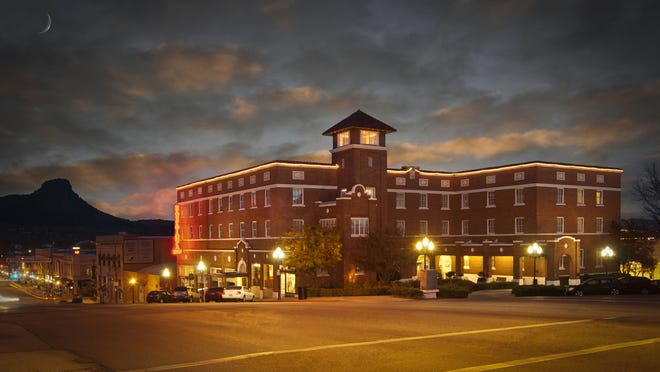
Bars are havens for epic tales, sharing of secrets and making memories that stand the test of time, thanks in no small part to liquid courage courtesy of Milwaukee, Jalisco, Burgundy and Kentucky. And if the walls could talk at these bars, which are among the oldest in the city still shaking, stirring and pouring, they’d spill a lot of tea.
So, pull up a seat and order something stiff at the most historic drinking establishments in the Valley.
Year opened: 1935
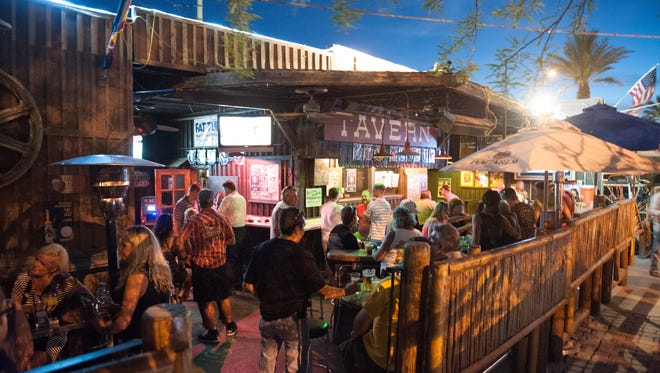
With an original owner named Johnny Walker, how could this bar not have staying power? Walker’s effort to serve workers building the Bartlett Dam evolved into a beloved watering hole named after Harold Gavagan, who bought it from Walker. The tales about lions and tigers caged in the back room and whispers about Gavagan signaling closing time by firing his gun into the air only added to the legendary attraction that has drawn movie stars and country singers to the humble bar over the years. And good luck finding an open seat during football season as it’s known as “Heinz Field West,” one of the biggest Pittsburgh Steelers bars outside of Pennsylvania.
Details: 6895 E. Cave Creek Road, Cave Creek. 480-488-1906, haroldscorral.com.
Year opened: 1947
Located on the site of what was the largest cattle feedlot in the world when it opened 75 years ago, this saloon and steakhouse began as a way to feed the workers at the packing house owned by cattle baron Edward A. Tovrea. In 1953, a fire all but destroyed the building, but the bar reopened after a year-long renovation and guests can once again see the original murals along, chandeliers and hand-carved custom mahogany bar. In 2004, an extensive revamp earned the building a place on the Phoenix Historical Register.
Just like the adjacent restaurant, the saloon menu features the beef that made The Stockyards a major player with prime beef sliders and a New York strip sandwich. The calf fries, also known as Rocky Mountain, remains a menu staple.
Be warned, this saloon has a reputation for being one of the Valley’s most haunted places. Hey, a spot this old is bound to have a few ghosts.
Details: 5009 E. Washington St., Phoenix. 602-273-7378, stockyardssteakhouse.com.
Year opened: 1947
When this tiki bar opened on Grand Avenue, the road that doubles as US 60 was the main highway through town, connecting road trippers from Phoenix to Vegas and all the dusty stops in between.
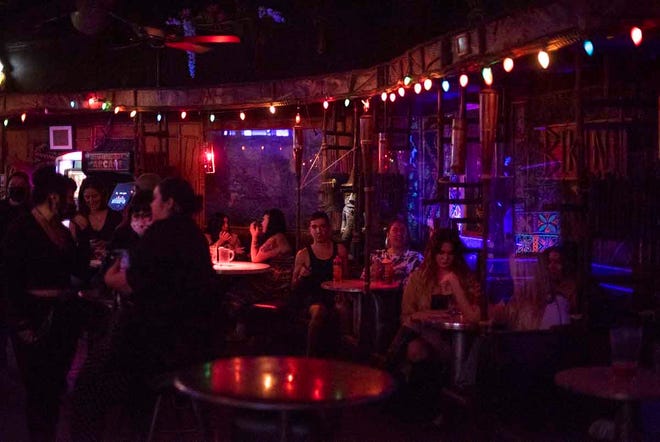
The absence of windows means the place remains dark day and night, save for the daylight that floods in the door whenever someone walks through it. It’s a diverse crowd with older regulars returning for the retro vibe, blue collar types appreciating the cheap drinks and no frills digs and hipster types appreciating the authenticity. No one seems to mind the occasional sticky floors or original decor. Another thing that’s stayed the same is the bar’s cash only policy.
Details: 1502 Grand Ave., Phoenix. 602-252-0472 facebook.com/theBikiniLounge.
Year opened: 1951
Established as the first bar in Scottsdale, its location in the former Farmer’s Bank of Scottsdale, built in 1921, makes it an official historic landmark. Walk through the wooden swinging doors and step back into the old wild west with old time barstools, a hodgepodge of kitschy decor and a stage where live country music begs for foot-tapping and dosey doeing every night. Celeb sightings have included Post Malone, Blake Shelton and once-upon-a-time couple Vince Vaughn and Jennifer Aniston .
Details: 7245 E. Main St., Scottsdale. 480-425-7787, rustyspursaloon.com.
Year opened: 1959
Not to be outdone by its Main Street counterpart, this bar claims to be the oldest tavern of its kind in Old Town Scottsdale, having opened its doors when the city was a one stoplight town and its streets saw their fair share of horses. Open 365 days a year, regulars know to head here for cheap drinks, a good patio and relaxed vibes. Expect a dressed-to-the-nines crowd, whether popping in for a beer at 6 am or a nightcap at 2 am Rustic, cozy and loaded with Southwest charm, you won’t find a more festive best dressed bar during the holidays.
Details: 7011 E. Indian School Road, Scottsdale. 480-990-3433, coachhousescottsdale.com.
Year opened: 1964
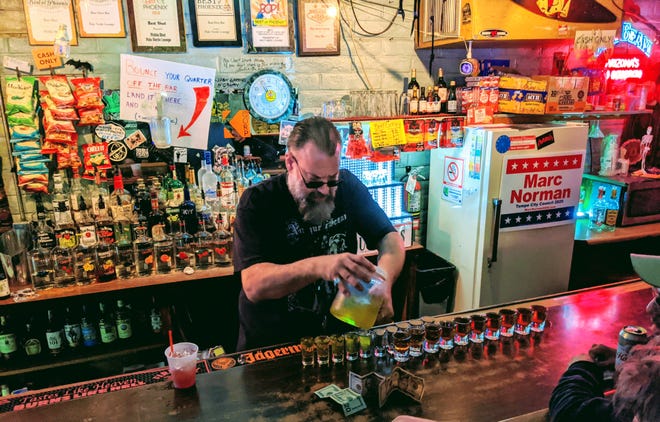
You know those bars that appear divey on the outside, but are far from it on the inside? That’s not this central Tempe blink-and-you’ll-miss-it spot. Its reputation as Tempe’s oldest and perhaps most legit dive bar is well deserved thanks to an ultra laid back attitude accented by the prerequisite pool tables, juke box and dark and dank environments that create a special kind of charm. Stroll in and expect to find a mix of
The UK should increase visas for seasonal workers as part of a drive to cultivate as much food as possible domestically, a former chief of MI5 has said.
Baroness Eliza Manningham-Buller, who led the domestic intelligence service from 2002 to 2007, said in a lecture that security of food supplies would fit within the government’s own definition of national security. She said she believed this meant strengthening domestic supply.
“We need to acknowledge that we should produce as much of our own food as we can, with due regard to sustainability, and be able to export what we can,” the former director-general of the Security Service told members of the National Farmers ‘ Union.
“Several people [have] said that [food security] was about just getting a secure food line from somewhere else. . . I’ve interpreted it differently,” Manningham-Buller said.
“We have a hope that we will continue to get food from our nearest neighbors as we get energy from them. But I think the more we can be self-sufficient, the better chances we have of standing price hikes, spikes, shocks and so on — and politics.”
Manningham-Buller, who now runs a small sheep farm in Wales, added: “[We] clearly need a better visa policy so that these workers who are not available here can come here and help us.
“We must have visas for seasonal workers. And it’s not just about [the food sector], there’s a shortage of labor across the economy, whether it’s care homes, whether it’s doctors and nurses . . . It shouldn’t be beyond our wit to develop a visa system that deals with that.”
Manningham-Buller’s intervention comes as the UK grapples with its post-Brexit food policy and after Russia’s invasion of Ukraine brought supply lines into the spotlight by risking international grain flows. She said this constituted a “weaponisation of food”.
UK farmers are pushing for a larger allocation of visas for seasonal workers to pick fruit and vegetables, saying that the current 40,000 tally falls far short of the 70,000-80,000 needed. But a succession of home secretaries has pushed back against increasing numbers as they seek to keep overall migration numbers down.
The free market Institute of Economic Affairs think-tank, whose ideas inform parts of the ruling Conservative party’s thinking, has meanwhile argued that agricultural policy should focus on UK farmers competing in global markets. Parliament’s environment, food and rural affairs committee is holding an inquiry into food security.
Manningham-Buller’s comments align her with the farming lobby, which has pushed for a strategic move to increase domestic food cultivation — which currently provides about 54 per cent of the UK’s supplies — and for post-Brexit farm subsidies to recognize the role of food production alongside environmental improvements.
The former MI5 head said she had overseen a doubling of the security service’s staffing and a drive to broaden the thinking of successive governments on national security, pushing other public bodies to consider its relevance to areas such as food.
By Jeff Havens
Editor’s note: The Lewis and Clark Expedition, commissioned by President Thomas Jefferson, mapped and explored the Louisiana Purchase and areas West from 1804 to 1806, including the area from the Missouri River to the Pacific Ocean.
They were on the edge of starvation in the Bitterroot Mountains during mid-September 1805.
The 34 members of the Lewis and Clark expedition were so hungry they started eating their own horses. They also supplement the meat with canned “portable soup” on Sept. 14, 15, 16, 18, and 19 in that difficult year.
When Capt. Meriwether Lewis paid for canned soup in Philadelphia in May 1803, he could have never imagined his emergency food had a fair chance of killing all members of the expedition. This fact was largely dependent on whether the soup was boiled before consumption. To add to this difficulty, the emergency food was contained in lead canisters in which no oxygen could flow into the food.
This ignorance is comprehensible by today’s standards because science has yet to understand both germ theory and the negative health consequences of ingesting leads. In addition, scientists and food processors have no understanding of the deadliest known food poison: botulinum toxin.
Reasonable persons believe we have advanced well beyond early 19th-century ignorance, and in many ways, we have progressed. However, in some ways we are regressing, much to the detriment of public health.
Botulinum is a potent neurotoxin toxin. It is created under low-acid, low-oxygen environments, and cannot be detected by sight, smell or taste. One tablespoon of purified botulinum toxin has the potential to kill all humans on Earth, if an antitoxin is not administered, usually within the first 48 hours of symptom onset. In the worst circumstance, the toxin can be neutralized if the food is boiled prior to consumption for at least ten minutes, and longer at mountain altitudes.
This fact may have saved the expedition. as Pvt. Joseph Whitehouse suggested in his journal on Sept. 15, “we melted Snow to drink & make portable Soup.”
In 1803, Lewis had Chef Francois Baillet create a thick paste, consisting of water, beef chunks, egg whites, and chopped vegetables, known as “portable soup.” Baillet likely learned his food canning method indirectly through the efforts of French Chef Nicholas Appert who developed his canning process from 1799 to 1809. Appert packed foods into glass bottles, corked openings, and submerged the bottles in boiling water for times ranging from seven to 120 minutes. Appert eventually won a prize of 12,000 francs for his efforts in 1810 from emperor Napoleon Bonaparte of France.
Napoleon wanted a way to nourish troops for military campaigns.
The soup Lewis would buy today be classified as a low-acid canned food. Similar high-risk canned foods, to which substances like vinegar are added, are classified as acidified foods. Both of these foods are high-risk canned products, regulated by either the Food and Drug Administration (FDA) or the US Department of Agriculture (USDA).
Which agency has authority over high-risk canned food depends on two factors: the most relevant is whether the ingredients or product have been, or will be, subject to interstate commerce.
In the circumstance of the 2021 “Montana Local Food Choice Act,” the law bends over backwards to avoid USDA authority for both ingredients and products. However, it only does the same for FDA products. In other words, it’s impossible to legally reason that local “homemade” commercial food products using non-local ingredients are outside the FDA jurisdictional authority.
“Local” cannot also mean “nonlocal.” Worse, the law claims to be outside of consumer safety protections any reasonable person would expect from such homemade commercial foods.
One of the reasons for the extremely low number of incidents involving commercial foodborne botulism is that these foods have been subject to federal consumer safety standards.
If a state has no regulations or refuses to enforce regulations for high-risk canned foods, and the product includes interstate ingredients, the producer of that canned product is only exempt from the FDA’s emergency permit provision if they meet minimum standards. In such a circumstance, the FDA commissioner must investigate to determine whether to take emergency action on behalf of the public. Because most cases of botulism involve homemade food, it’s highly unlikely that any FDA commissioner would find an emergency permit provision that would not apply to Montana’s commercial homemade food law.
According to surveillance data from federal authorities, in the lower 49 states, the majority of botulism cases are attributed to homemade foods. For example, the most recent data available for 2018 indicated there were 17 laboratory-confirmed cases. Of the 17 cases, nine were attributed to homemade foods.
But this botulism risk is acceptable to Montana state Mon. Greg Hertz, Gov. Greg Gianforte, and state health department director Charles Brereton, who refuses to legally challenge