Slider Image 1 Content

Choose best, Choose tasty
Slider Image 1 Content

Slider Image 2 Content
Here you can showcase the x number of Featured Content. You can edit this Headline, Subheadline and Feaured Content from "Appearance -> Customize -> Featured Content Options".

One of Utah’s most acclaimed restaurants is on the verge of collapse, under a half-million dollars in debt, according to its owners — who are asking their fans and friends for help through a crowd-funding campaign.
In the first hours of the campaign, those fans responded generously.
Blake Spalding and Jen Castle, co-chefs and co-founders of Hell’s Backbone Grill & Farm in Boulder, went public with their restaurant’s problems in a letter accompanying a GoFundMe campaign that went online Monday.
Spalding and Castle wrote that 2022 was the hardest year they have endured at the restaurant, at 20 N. Highway 12 in Boulder — one of the nation’s most remote towns, near the Grand Staircase-Escalante National Monument.
“Throughout our 23 years as restaurateurs, we’ve always identified as deeply self-reliant,” they wrote. “Even during three difficult and stressful pandemic years — and even when we received threats for advocating for the monuments — we declined offers from friends to help us fundraise for our survival. We’ve finally accepted that we need help.”
The duo wrote that “spiraling costs and a shockingly reduced summer visitation to the whole southern Utah region have turned things upside down, and we now recognize that we can’t move forward alone.”
Spalding told The Tribune that she and Castle had “made the decision that we couldn’t continue to slide into untenable debt, and were planning to let it go. And then a number of people reached out, even guests from the restaurant whose names I don’t recognize, … people who aren’t necessarily friends, or close, but were saying to us, over and over, the same thing: ‘Please don’t make this choice without us. Give us the opportunity to help.’ It took a whole month for us to wrap our heads around that, because it felt really vulnerable to put it out there.”
Hell’s Backbone has always had challenges, with its remote location making sourcing and delivery have always been tricky. The business is also seasonal, and rises and dips according to tourist traffic.
The restaurant is known for its farm-to-table menu. Most of the produce is grown on their own farm, with a crew of four or five people, plus volunteers and interns. Most of the meat is raised, cleanly and humanely, by ranchers nearby in Garfield County.
In March, Hell’s Backbone Grill was named a semifinalist for the James Beard Awards in the “outstanding restaurant” category, the first Utah restaurant to receive the prestigious national honor.
The restaurant weathered the COVID-19 pandemic by offering takeout meals, and by receiving federal PPP loans totaling $689,587, according to a ProPublica database; all of those loans were forgiven.
The GoFundMe campaign aims to raise money to help cut the $500,000 debt the restaurant has accumulated, allow them to buy a building to be a permanent home instead of renting, and to upgrade the infrastructure at the restaurant and the farm. (In their letter, Spalding and Castle say they have been using the same refrigerators, and pots and pans, since they opened.)
As of Tuesday evening, a day and a half after the campaign was first posted, more than 1,300 people have pledged to donate $180,453.
In a follow-up to their first letter on GoFundMe, Spalding and Castle wrote that “we are positively overwhelmed by the outpouring of support — from near and far — and the love that we feel from each of you.”
Spalding and Castle set a starting goal of $324,000. “The number isn’t arbitrary — it’s 3 x $108,000. In Buddhism, 108 is an auspicious and sacred number, the completion of a cycle of mantras on a mala of beads,” they wrote. (Spalding is a practicing Buddhist.) “This is also an amount we believe will secure our short-term survival.”
Spalding said that people need to know that “we are not the only restaurant that’s in this sort of peril. … I think most smaller, independent restaurants are having a really, really hard time right now.”
She cited her friend, Salt Lake City baker Romina Rasmussen, who announced in mid-November that she would close Les Madeleines, the beloved French bakery she has owned and operated for 19 years, at the end of December. That news, Spalding said, “is a real heartbreaker, because her place is extraordinary.”
Right now, Spalding said, the online store at Hell’s Backbone Grill has slowed down, because of employees out sick with COVID-19. “We’re about to see a huge new wave of [restaurant closures],” she said, “because we all took the economic impact disaster relief loans, thinking it would give us some resilience. But I don’t think anyone expected the impact to go on so long.”
Fans of Hell’s Backbone Grill have been expressing their love of the restaurant, and of Spalding and Castle.
Amelia Luttmer,
SPOTSYLVANIA COUNTY, Va. – A Fredericksburg restaurant owner and political candidate says he’s not done fighting, just days after his business was raided by the Virginia Alcoholic Beverage Control Authority.
“What the state of Virginia just did is they took my livelihood away from me right before Christmas,” Gourmeltz owner Matt Strickland told FOX 5 Monday.
Strickland has been in the headlines before.
Early in the pandemic, he refused to follow Virginia’s COVID-19 guidelines, like encouraging mask-wearing and social distancing.
Ultimately, both the restaurant’s health and alcohol permits would be suspended.
PREVIOUS COVERAGE: Restaurant owner says he’s staying open after license suspended for COVID-19 violations
Strickland went to court and got his health permit back, but the Virginia ABC wrote that despite a lengthy legal battle and the Circuit Court of Spotsylvania County ruling in the ABC’s favor, Gourmeltz “… continued to serve beer, wine, and mixed beverages to customers.”
“I knew that the only way we’d come out of this was by the community standing together and fighting back against this tyrannical government, so I continued to sell alcohol,” Strickland said.
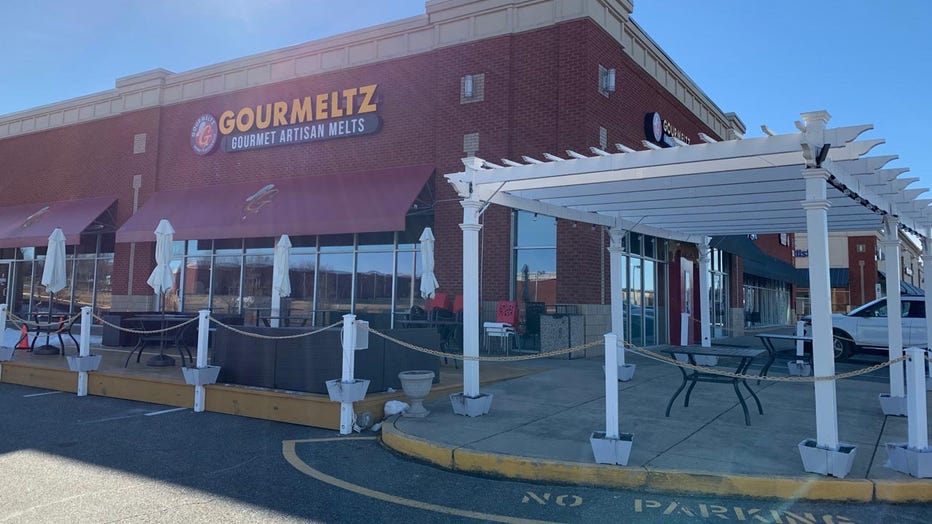
The ABC also said they’d reduce the alcohol license suspension to 15 days upon the payment of a $4,000 penalty and another $6,469.18 to cover the investigation.
Judge says defiant Fredericksburg restaurant that broke COVID-19 rules can stay open, according to attorney
“I’m not paying any fine. I’m not serving any suspension, and the reason for that is because I did nothing wrong,” Strickland said.
Instead, the Army veteran has vowed to continue his fight, now planning to run for the State Senate in 2023.
There is a new twist in the fight between Virginia officials and a restaurant that refuses to obey COVID-19 rules.
“I’m not concerned whatsoever,” Strickland said when asked if he was worried the state could take further action against his business. “I’ve been ready to die for my country since I was 17 years old, and I’m willing to fight as long and as hard as it takes to make sure that this fight that I’m in right now, this fight that we’re all in right now, doesn’t get passed down to the next generation.”
The Virginia ABC developed a timeline of administrative proceedings and actions related to Gourmeltz, but declined further comment.
In the realm of wellness and rejuvenation, finding a sanctuary that resonates with holistic health principles is akin to discovering a hidden gem in the bustling fabric of urban life. A health place transcends mere physicality; it embodies a philosophy of balance and vitality, catering to both the body and the mind.
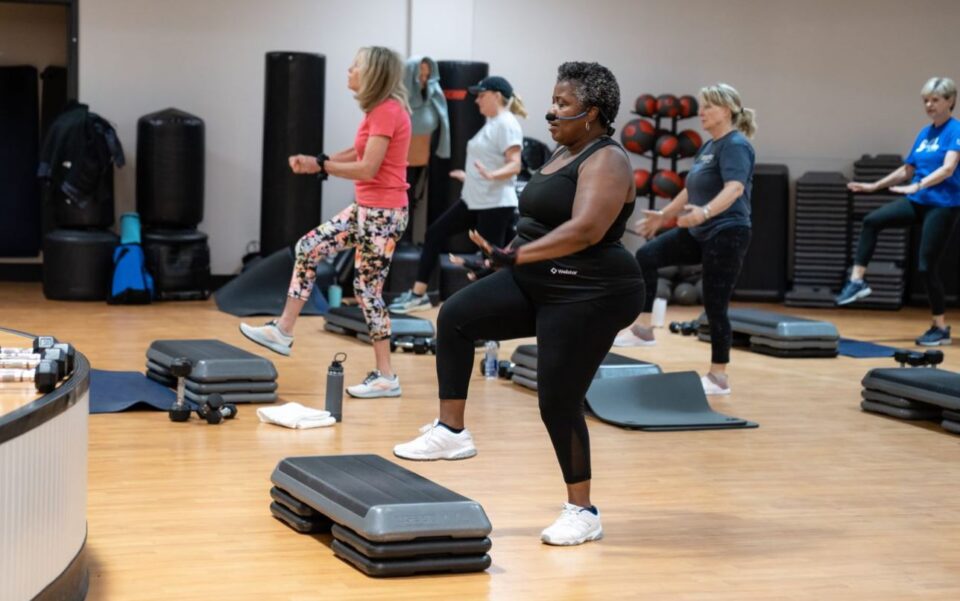
A Sanctuary for Wellness Seekers
Imagine stepping into a space where every detail is meticulously designed to promote well-being. From serene meditation rooms adorned with ethereal artworks to state-of-the-art fitness facilities equipped with cutting-edge technology, a true health place envelops you in an ambiance of tranquility and vigor.
Holistic Approach to Health
At its core, a health place integrates various disciplines such as yoga, aromatherapy, and nutritional counseling to nurture a comprehensive approach to wellness. Each program is curated to harmonize the body’s intricate systems, promoting longevity and resilience.
Nurturing Mind and Body
One of the hallmarks of a distinguished health place is its emphasis on mental health. Therapeutic practices like mindfulness meditation and cognitive behavioral therapy are woven into the fabric of daily routines, fostering emotional equilibrium and clarity of thought.
Technology and Innovation
Innovative advancements play a pivotal role in enhancing the health place experience. From biofeedback devices that monitor physiological responses to personalized health apps that track fitness goals, technology seamlessly integrates with traditional practices to optimize results.
Culinary Excellence
Nutrition is celebrated as a cornerstone of well-being, with organic farm-to-table dining experiences that cater to diverse dietary preferences. The culinary team crafts dishes that not only tantalize the palate but also nourish the body, utilizing locally sourced ingredients for sustainability.
Community and Connection
Beyond physical amenities, a health place thrives on a sense of community. Workshops, group activities, and communal spaces facilitate meaningful connections among like-minded individuals, fostering a supportive environment for personal growth.
The Future of Wellness
Looking ahead, organizations like pafikotanegara.org are at the forefront of promoting global wellness initiatives. Through research, advocacy, and community outreach, they advocate for sustainable health practices that empower individuals to lead healthier, more fulfilling lives.
In essence, a health place transcends its physical boundaries to cultivate a profound sense of well-being. It embodies a commitment to health in its myriad forms, from physical fitness to emotional resilience, offering a sanctuary where individuals can embark on transformative journeys toward holistic wellness.… Read More