Slider Image 1 Content

Choose best, Choose tasty
Slider Image 1 Content

Slider Image 2 Content
Here you can showcase the x number of Featured Content. You can edit this Headline, Subheadline and Feaured Content from "Appearance -> Customize -> Featured Content Options".

A Ukrainian man has gone viral on TikTok after showing his followers how he prepares dinner amidst the blackouts in his country, with some users praising his “resilience.”
In the video, TikTok user Gregory Donchik (gregorydonchik13) showed how he had to get creative to cook a pasta dish. The clip begins with a man dousing pieces of coal in an aluminum foil-covered pot with lighter fluid. He then prepared chicken, coating the meat with seasonings before sliding it into a frying pan, which was placed above the coals to cook.
After the chicken is finished, it cooks up a medley of vegetables in a frying pan and adds the meat. After boiling a pot of pasta and adding cream to the mixture, he’s left with what looks like a delicious and filling dinner.

Ukrainians have faced ongoing blackouts as a result of the country’s war with Russia after President Vladimir Putin launched an invasion in February.
In a Facebook post on Monday, Sergey Kovalenko, CEO of the Ukrainian energy provider YASNO, said the country could face several more months of power outages. The outages are a result of attacks on Ukraine’s power grid by Russian forces.
Since being shared on November 29, the viral TikTok post has attracted some 10.6 million views as well as more than 974,500 likes.
The overwhelming majority of those posting in the comments praised the man’s cooking—although some believed the pasta was a bit overcooked.
TikTok user Your Mr. Ice said: “Bro in Ukraine and still eat better than me.”
Amanda Patterson posted: “Bro’s in the middle of a war and people are still like ‘pasta’s overcooked,’ like brah at least they are alive.”
Khaled added: “If Ukraine eats like this, I’m moving there. That’s better than what I ate in my entire life.”
While Jamie commented: “Your resilience and bravery give me hope. your meal looks beautiful. keep finding light in the dark, friend”
Others cautioned Donchik of the health risks that come from cooking with coal while indoors.
“Please be careful. Coals produce carbon monoxide, a colorless odorless, and poisonous gas. Idk (I don’t know) if your outside but please do this outside if possible,” user Your Proud Dad wrote in the comments.
According to the World Health Organization, cooking with coal generates harmful household air pollution that can cause serious health risks, such as cancer. It is noted that each year 3.2 million people worldwide die prematurely from illnesses attributable to household air pollution caused while using certain fuels for cooking.
The WHO added: “6 percent are from lung cancer: approximately 11 percent of lung cancer deaths in adults are attributable to exposure to carcinogens from household air pollution caused by using kerosene or solid fuels such as wood, charcoal or coal for household energy needs.”
Newsweek reached out to gregorydonchik13 for comment.
Welcome to The Receipt, a series documenting how Bon Apétit readers eat and what they spend doing it. Each food diary follows one anonymous reader’s week of expenses related to groceries, restaurant meals, coffee runs, and every bite in between. In this time of rising food costs, The Receipt reveals how folks—from different cities, with different incomes, on different schedules—are figuring out their food budgets.
In today’s Receipt, a 28-year-old English teacher in Providence, Rhode Island who drinks a lot of kefir, considers ruining her intestines to eat gluten, and is very opinionated about Caesar salad. Keep reading for her receipts.
What are your pronouns? She/her
What is youroccupation? I am a high school English Language Arts (ELA) teacher. During the fall, I worked as an Assistant Scorer for NCAA volleyball games, and in the spring, I coached a high school volleyball team.
How old are you? I’m 28 years old.
What city and state do you live in? Providence, Rhode Island
What is your annual salary, if you have one? $50,253, as a Level 2 teacher with Master’s. Level 2 is my salary step and year in teaching, so it means that I am a second year teacher. I have a Master’s of Education in Urban Teaching from Providence College, where I worked as a Graduate Assistant for the Black Studies Program.
How much is one paycheck, after taxes? $1,293.45
How often are you paid? (eg weekly) Biweekly
How much money do you have in savings? I have almost $1,000 in savings.
What are your approximate fixed monthly expenses beyond food? (ie rents, subscriptions, bills)
Do you follow a certain diet or have dietary restrictions?
I’m Muslim, so I don’t eat pork. I drink alcohol very rarely. Food allergies are the bane of my existence; I can’t eat gluten, garlic, almonds, hazelnuts, jicama, jackfruit, cherries, or kiwi.
What are the grocery staples you always buy, if any?
I’m always buying kefir, yogurt, granola, coffee, half and half, arugula, mushrooms, bananas, rice cakes, dates, eggs, deli meat, rice and lentils.
How often in a week do you dine out versus cook at home?
I typically eat out one to three times a week.
How often in a week did you dine out while growing up?
My family would have “Junk Food Mondays” when my parents would go to a fast food restaurant and pick up dinner. Once in a while, my grandpa would take us out for dinner, or we would go somewhere as a family for special occasions. Kabob and Curry, Andrea’s, and East Side Pockets are three places in Providence where we would get take out from once in a while. My family has been eating at those restaurants for more than 20 years. Being a regular is nice, because they know we like a lot of extra sauce.
THIS ARTICLE IS ADAPTED FROM THE DECEMBER 3, 2022, EDITION OF GASTRO OBSCURA’S FAVORITE THINGS NEWSLETTER. YOU CAN SIGN UP HERE.
When I was a 22-year-old teaching English in Wuhan, China, I spent almost every Saturday night at a punk club in the Wuchang district. The joint never really got going until midnight, by which time the dance floor was sticky with spilled baijiu and the dive bar next door was spilling into the street. By the time I staggered out at the tail end of the night, I was a real mess—but more importantly, I was hungry.
Luckily, Wuhan has a long history of serving excellent food at odd hours. The city’s famous re bro mian (“hot dry noodles”) don’t make an appearance until dawn, but the hawkers grill up the rou chuan—lamb skewers liberally dusted with cumin and chile —had a sixth sense for pulling up right when the revelers were rolling out.
Although originally from Xinjiang province, the skewers are popular around China, especially in Beijing (where they’re known as chuan’rwith the hard Beijing r). They’re great as a snack at any time, but at a certain point in the night, the alchemical combination of charred animal fat, smoke, spices, and salt is nothing short of transcendent.
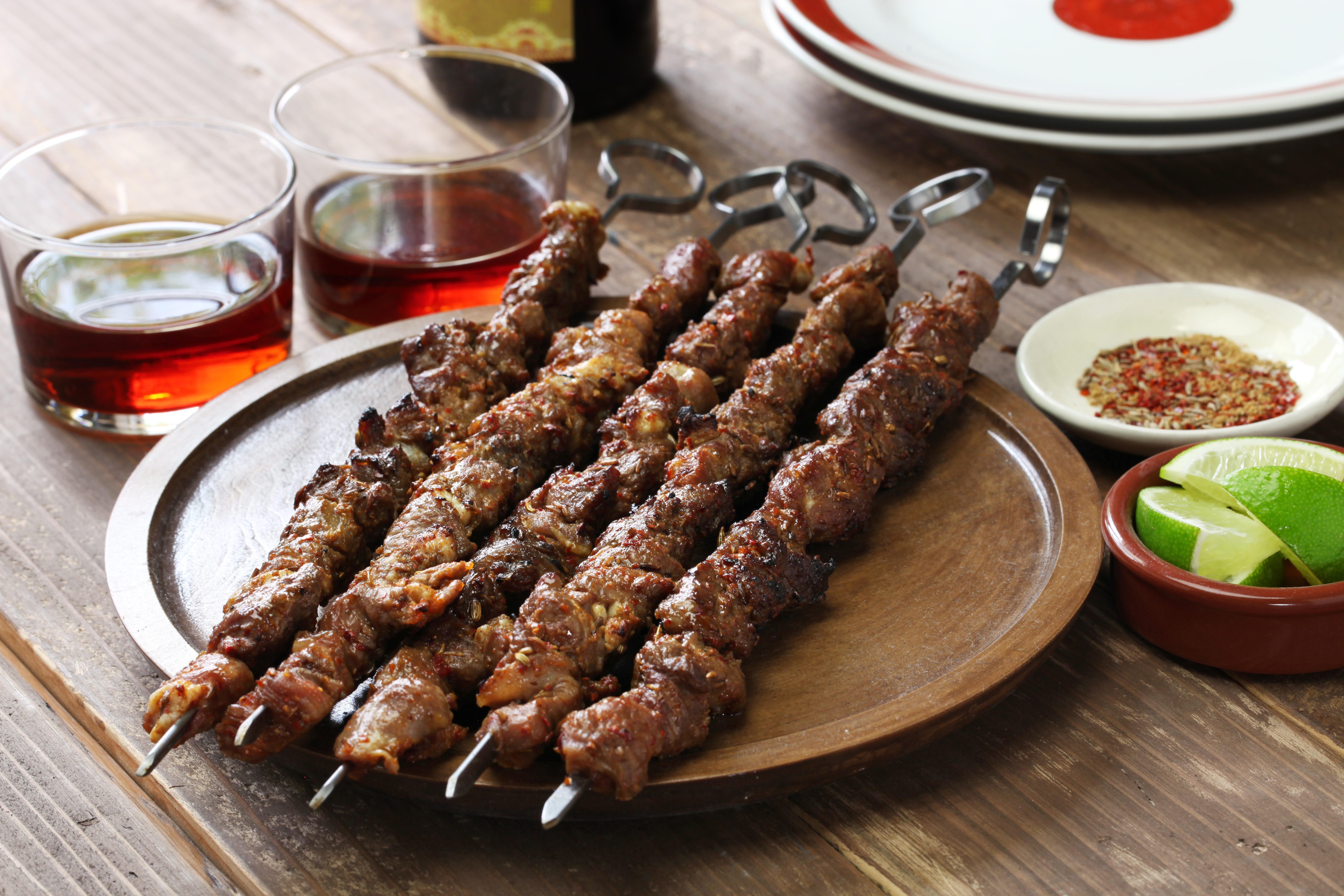
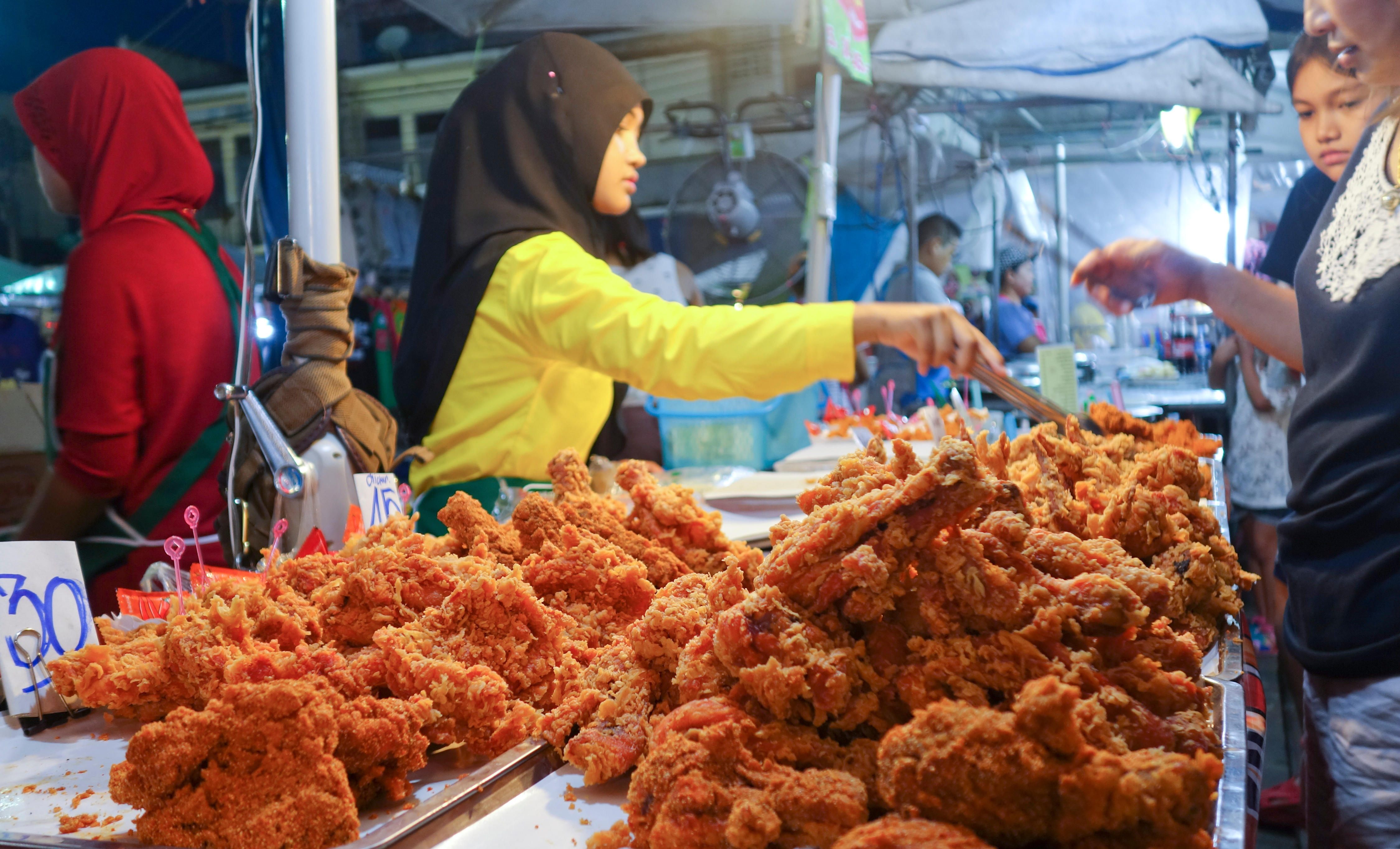
Science has told us that nothing can really save you from a hangover, but certain foods definitely seem to help—or at least feel destined to pair with booze. After I moved to Bangkok, I swapped the chuan for hoy tod (an oyster slathered omelet with hot sauce), gai tod hat yai (shatteringly crisp fried chicken), and bowls of kuay teow reua (“boat noodles” made fragrant with star anise and rich with pig’s blood). In Berlin, my order became ein Doner mit allesthe kebab born in the city’s Turkish-German diaspora, served with all the fixings.
Even since moving to New York, my late-night eats have shifted with neighborhoods and boroughs. I never got the appeal of New York–style pizza until I moved around the corner from a slice shop that stays open until 4 am
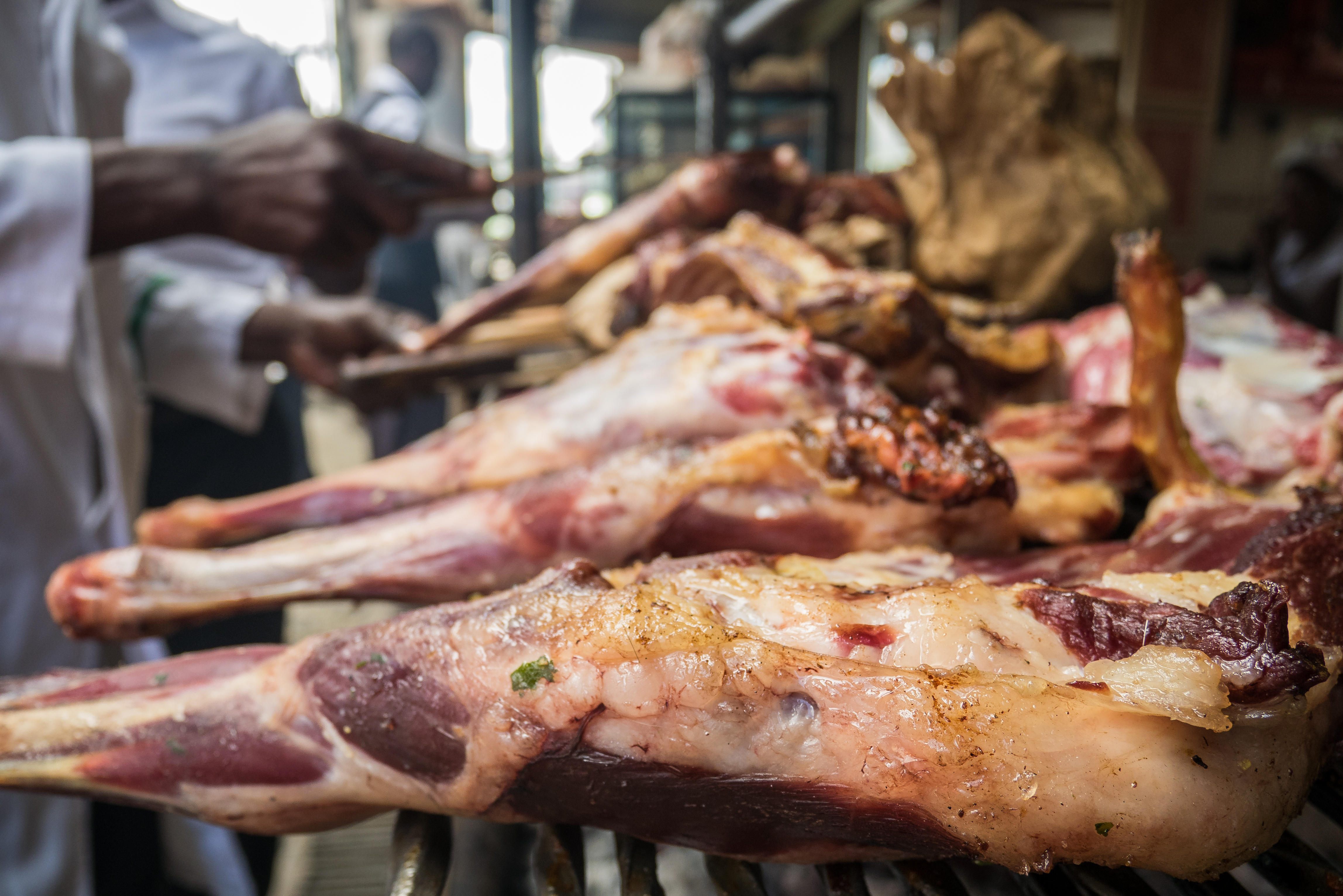
While living on Mott Street, in the heart of Manhattan’s Chinatown, my nights ended in tangles of taxi-yellow lo mein topped with Cantonese-style roast duck or once, in a memorable (but delicious) misorder based on a drunk friend’s attempt at Mandarin , a platter of garlicky snails in a subterranean dining room.
Because the neighborhood was hit so hard financially during the pandemic, many of Chinatown’s iconic after-hours spots are now closing early. As grateful as I am to see them still there, it hurts to imagine that those feasts in the liminal space before sunrise might be gone.
Because so many cities have their own drinking foods, powerful, Pavlovian connections form between our most memorable nights and the dishes that fuel us through them. Drinking food has become a point of pride for the places that serve them, partly because our associations feel so personal with them.
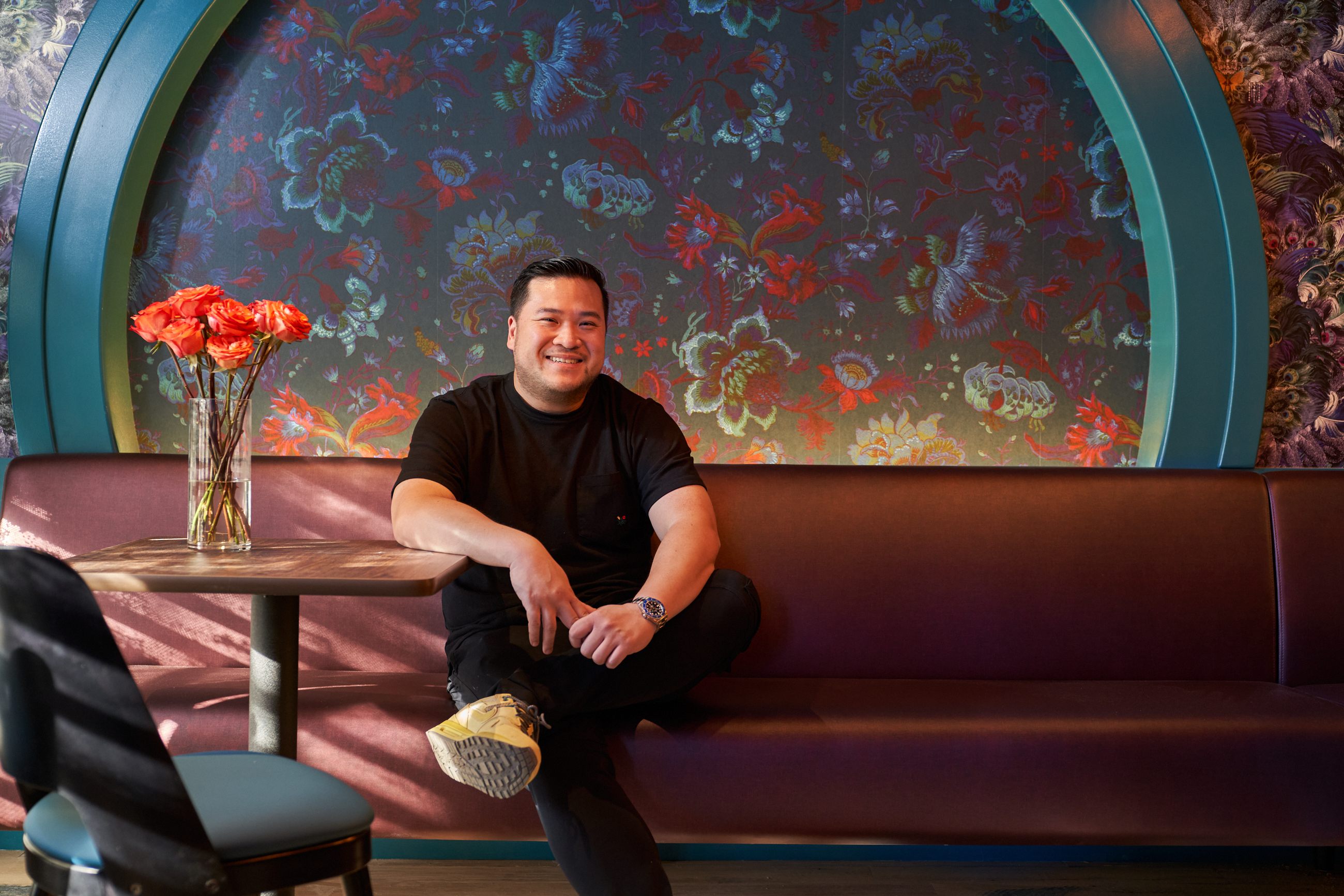
For Jimmy Ly, the chef-owner of Monsieur Vo in New York’s East Village, Vietnamese drinking-food culture feels especially personal. Born and raised in Queens, Ly grew up with one foot culturally in New York and one in Vietnam.
His menu at Monsieur Vo is an homage to ăn nhậu, or Vietnamese gastropub culture, as well as the kind of flavor-charged fare his dad used to serve at dinner parties in their home when the top-shelf cognac came out. I spoke with Ly about trying to stave off hangovers, being the life of the party, and craving com chay. Below is our conversation, which has been edited for length and clarity.
How would you characterize Vietnamese drinking foods?
Every culture has its drinking foods. I think in Vietnamese culture, it leans more towards the pungent flavors—more anchovies, more fermented fish. My dad would start off [his parties] with a lot of fried dishes. There were shrimp fritters, which are great for absorbing alcohol.
Fermentation is always a thing in Vietnamese drinking culture. So in dishes like our salads, it gets really wild. My dad made one salad with mango, chile, and little fermented soft-shell crabs. It was pungent and salty and sweet all at the same time.
You’ve said that your dad was a big inspiration when he came to Monsieur Vo. How did he factor into your menu development?
For months, I leaned really heavily on my upbringing and my experience. I had a lot of talks with my dad and