Slider Image 1 Content

Choose best, Choose tasty
Slider Image 1 Content

Slider Image 2 Content
Here you can showcase the x number of Featured Content. You can edit this Headline, Subheadline and Feaured Content from "Appearance -> Customize -> Featured Content Options".

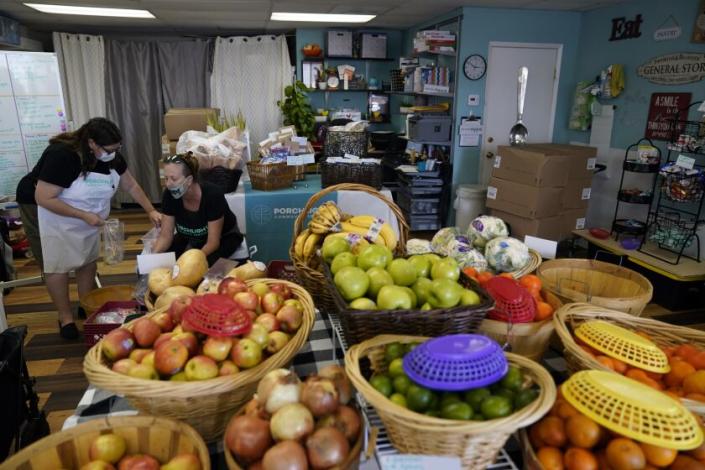
Everyone should have access to food. Yet it’s not considered a human right — like education or healthcare or drinking water — that is defended and guaranteed by the government. why?
Maybe because, until recently, it was hard to imagine the technology, the industrial systems and the abundance to support universal food access. But it’s looking possible these days, and tentative experiments are moving the US in that direction.
The idea of providing total access to food has been taking hold in different forms: As lines outside of food banks persisted and hunger skyrocketed during the pandemic, public schools temporarily offered free meals to all students. In the last two years, lawmakers have been debating bills that would make school lunches free for all, permanently.
States including California, Maine, Massachusetts, Nevada and Vermont and cities like New York have already secured funding for their own free meal programs, regardless of family income. Universal food policies have also appeared in Minnesota, Maryland, New York, North Carolina and Wisconsin. In 2021, West Virginia policymakers proposed adding a “right to food” to the state’s constitution, while Maine’s House of Representatives overwhelmingly voted for a similar measure. The United Nations food systems summit in 2021 even promoted the idea of universal access globally.
One way to achieve universal access in the US would be a new public food chain. Like the parallel systems of private and public schools or hospitals, it could be funded by the state or federal government and could coexist with the current marketplace. It could repurpose some of the subsidies that have been helping consolidated agribusiness for decades, ensuring that taxpayer money instead pays for food that would be made available outside the commodity system. This idea seems particularly urgent when the markets have been co-opted by corporations and billionaire landowners.
Universal food access would give hungry families another layer of support, without any shame. Universal food, crucially, would augment federal nutrition programs like food stamps, which cost the federal government more than $100 billion a year without reshaping the food industry for the better, while also stigmatizing beneficiaries.
That’s part of the appeal to Spanish chef José Andrés, who leads an organization to provide free meals after natural disasters. Universal access is an improvement over public assistance programs. “The system that is clear right now is, everybody is going to know you are in need. Anybody can be having a hard time,” Andrés told me. “Let’s create systems that don’t shame anybody.”
One way to do that would be to restructure some food companies, distribution warehouses and retailers as a public utility, like how the energy grid, sewers and water delivery are managed. If some processing plants, distribution warehouses and retailers were owned by the government, they could use subsidies to buy grains, legumes like beans and meat directly from farmers, and the resulting goods could be made freely available to everyone. Programs could alternatively take the form of universal school meals and open-to-all cafeterias that serve meals throughout the day.
I’m rooting for a different approach that strikes me as easier to implement, because it can operate within the existing food industry.
Errol Schweizer, formerly Whole Foods vice president of grocery, started researching the idea of a “public food sector” after the 2021 blackout in Texas when a winter snowstorm devastated the state’s power grid. Without heat and water in most places, 246 people died. In Austin, Schweizer and his family were without water for a week. He wondered: Why doesn’t the city have its own emergency response department that could operate as a publicly owned food distribution system to make sure residents are fed in times of crisis?
“I came at this from being a retailer,” Schweizer told me. “It still needs to be framed around meeting demand. Supply chains don’t come into existence naturally. They respond to the power of purchase orders.” An emergency system like he envisioned could be the beginning of reshaping the food supply chain, because the government could become a major purchaser and could exert influence.
That’s how markets are built to work, not through subsidies such as those in the five-year, $400-billion farm bill that was enacted in 2018. Debate about its successor will begin in the months ahead, to be passed by the new Congress next year. That’s an opportunity to shift funding away from subsidies and toward market-based solutions.
With a public food sector, farmers would directly benefit, without giving part of their share away. Markets would also add another buyer, fixing how uncompetitive some meat markets in
So much of the recent news about robots in restaurants has focused on the kitchen, where experts seek to engineer the perfect automated pizza maker or a robotic fry station attendant. While the jury’s still out on whether these devices could ever demonstrate the dexterity humans have for making food taste good, they seem more approachable for many restaurant operators than service robots. Even so, the launch of these tools is often marked with headlines like “Attack of the pizza making robots” and “The robots are here,” as if we’re facing an alien invasion!
If you’ve ever been served by a robot in the front of a restaurant, it can be rather surprising at first. For customers and staff alike, the presence of these automated workers can set off alarm bells. Customers might worry the lack of human interaction will ruin their experience or result in unnecessary mistakes. For employees, robots might incite fears of being replaced.
The ultimate helping hand, robots are uniquely positioned to support restaurants through the current wave of labor shortages and inflated food costs — that is, if they’re introduced and used correctly.
Relieve, not replace
To ensure robots become an ally to service staff, it’s important to set expectations about what these automated co-workers can and can’t do. They are best utilized to perform physical, repetitive, and manually straining tasks, thus relieving staff from these duties. For example, they can carry multiple hot pots out of the kitchen and bring them to guests, avoiding painful, costly spills along the way. They can help servers clear the entire dining room in one quick trip. They can even wash the floors before, after and during a shift.
All these routine tasks, when handed off to a robot, free up front-of-house employees to do the more important tasks that require interaction with guests, like recommending the right dish, making a memorable conversation or fulfilling a more specific ask. Servers have more time to engage with guests, check in on their tables, and generally ensure an excellent dining experience when accompanied by a robot. The key word is accompanied. Make sure employees know the bot is there to support them, not replace them.
Not only will the robots work alongside servers, but in time, this collaboration will also result in servers on duty taking home a higher percentage in tips — robots don’t need to be paid. By delivering food, cleaning and serving, robots ensure workers are less overworked and less physically taxed while being paid the same, or perhaps even more than before.
Enhancing the experience
Robots can be a marketing tactic for many restaurants, as some diners will seek out this novel dining experience. However, for more particular customers expecting a traditional service, robots can seem like the end of a golden age of dining. It will be important robots follow the established rules of restaurant service and enhance the experience without taking anything, including familiarity, away.
Robots should avoid hitting guests. This may seem obvious but from a technical standpoint it is actually one of the harder parts about introducing robotics. Advanced AI is required in order to realize intelligent delivery in restaurant scenarios. The positioning technology must be effective to navigate dining rooms with multiple walkways and several dozen guests. New vision-based robot localization and mapping technology allows some restaurant bots to find their way without markers, making them much easier to deploy, especially in high ceiling environments. Adaptability in all scenarios, like recognizing and slowing down for elderly guests and children, is also critical to ensure customers feel comfortable around robots.
Not only does advanced positioning technology reduce the risk of collisions, but it also increases the likelihood of robots bringing the right food to the right table. Few things annoy a guest more than waiting for food only to have it be the wrong dish, or having it spill on the way out of the kitchen. Robots can build trust with guests by consistently performing as they’re intended.
Bots come in all shapes and sizes with a unique variety of capabilities. For restaurants, it’s as important for the robots to be aesthetically pleasing as it is for the carefully designed dining room. A terminator-looking bot is probably not going to put guests at ease. But something cute and cleanly designed will make guests feel comfortable and entertained. Taking this a step further, advanced robots can also be engaging, welcoming customers with greetings, telling jokes and providing voice or emoji feedback. While they’ll never replace a human in terms of engagement, robots can appear more approachable with these small touches.
To ensure an exceptional experience for both staff and
CLEVELAND, Ohio – Chinese food is timeless, and arguably the best food to order when you want to experience a true depth of flavor.
While Northeast Ohio may not be home to the expansive Chinese cuisine scenes of other cities in the United States, there are still plenty of options for those of us needing to satisfy a craving for Peking duck, General Tso’s chicken or Mongolian beef.
While these staples can be found in just about any Chinese restaurant menu, there are plenty more delicious options to tempt your palate than the usual American-Chinese fare.
We checked with our partner Stacker, which compiled a list of the 17 best Chinese restaurants in Greater Cleveland to give you new options than your usual go-to.
Methodology
Stacker compiled a list of Cleveland’s highest-rated Chinese Restaurants using Tripadvisor rankings.
Ratings: 3.5
Address: 13800 Detroit Ave., Lakewood
Read more about Szechwan Garden on Tripadvisor
Ratings: 4
Address: 15210 Bagley Rd., Middleburg Heights
Read more about Wah Fu Chinese Restaurant on Tripadvisor

(Photo by David Petkiewicz, cleveland.com)
Ratings: 4
Address: 3142 Superior Ave. E, Cleveland
Read more about LJ Shanghai on Tripadvisor
Ratings: 4
Address: 8800 Day Dr., Parma
Read more about Chopsticks Express on Tripadvisor
Ratings: 4
Address: 17452 Lorain Ave., Cleveland
Read more about Dragon Tower Restaurant on Tripadvisor
Ratings: 4
Address: 7080 Engle Rd., Ste. B, Middleburg Heights
Read more about Blue Jade on Tripadvisor
Ratings: 4.5
Address: 10393 W. Pleasant Valley Rd., Parma
Read more about Mandarin House Chinese Restaurant on Tripadvisor

Siam Café in ClevelandJudy Vegh, special to cleveland.com
Ratings: 4
Address: 3951 Saint Clair Ave. NE, Cleveland
Read more about Siam Cafe on Tripadvisor
Ratings: 4.5
Address: 3701 Payne Ave., Cleveland
Read more about Han Chinese Kebab & Grill on Tripadvisor
Ratings: 4
Address: 6050 Enterprise Pkwy., Solon
Read more about Hunan of Solon on Tripadvisor
Ratings: 4
Address: 724 Richmond Rd., Richmond Heights
Read more about Hunan East on Tripadvisor

You can’t go wrong with the Hong Kong noodle soup with three-flavor shrimp dumplings at Wonton Gourmet.The Plain Dealer
Ratings: 4
Address: 3211 Payne Ave., Cleveland
Read more about Wonton Gourmet & BBQ on Tripadvisor
Ratings: 4.5
Address: 8926 Brecksville Rd., Brecksville
Read more about Frankie’s Wok on Tripadvisor
Ratings: 4
Address: 20668 Center Ridge Rd., Rocky River
Read more about King Wah Restaurant & Lounge on Tripadvisor

Szechuan Gourmet is tucked away in an old warehouse a few miles east of downtown Cleveland, but it’s worth the hunt.
Ratings: 4
Address: 1735 E. 36th St., Near Payne Avenue, Cleveland
Read more about Szechuan Gourmet on Tripadvisor

Emperor’s Palace, a traditional Chinese restaurant opened in summer 2012. (Peggy Turbett/ The Plain Dealer)The Plain Dealer
Ratings: 4.5
Address: 2136 Rockwell Ave., Cleveland
Read more about Emperor’s Palace Chinese Restaurant on Tripadvisor
Ratings: 4
Address: 2999 Payne Ave., Ste. 102, Cleveland
Read more about Li Wah Restaurant on Tripadvisor
Related:
Best pizza restaurants in Cleveland, according to Tripadvisor
Best steakhouses in Cleveland, according to Tripadvisor
Best restaurants in Cleveland, according to Tripadvisor
Best ‘cheap eats’ in Cleveland, according to Tripadvisor