This Is Actually The Worst Beverage To Drink Every Morning If You Want To Lose Weight
If you’re trying to lose weight, it’s important to pay attention to everything you’re putting into your body–including the beverages you’re drinking. While we always hear about the value of a healthy breakfast, we can’t forget that what you drink in the morning also plays a major role in that. And as it turns out, many people are starting their day off on the wrong foot with one fattening beverage that can be detrimental to weight loss: sugar-loaded coffee.
To learn more about why you should leave the sugary ingredients out of your morning joe if you’re trying to shed a few pounds, we spoke to registered dietitians Trista Best of Balance One Supplements and Johna Burdeos. Read on for all of their expert insight!

75+ Gift Ideas For Everyone On Your Holiday List
Shutterstock
Sugary coffee
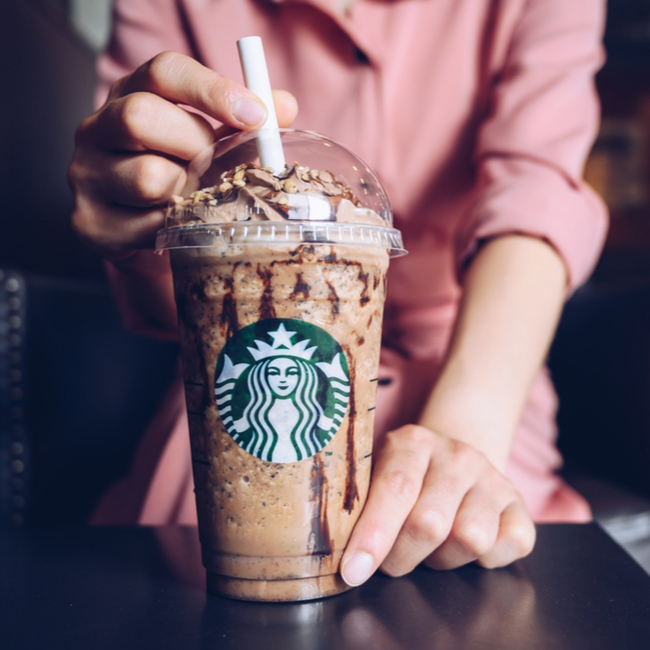
Many of us rely on a daily cup of coffee to kickstart our mornings and give us the energy to take on the day. And if you, like lots of people, are a big fan of the sweetener things in life, you may choose to load that coffee up with sugar, flavored syrups, sweet creamers, and more. Maybe you even have a go-to order at Starbucks that really pleases that sweet tooth of yours. However, unfortunately, Best warns that “one of the worst drinking habits for those who want a leaner body is consuming high sugar and fat specialty coffees.”
Of course, coffee alone isn’t the issue; it’s everything you put into it that can take a toll on your body. According to Best, “Coffee may lead to weight gain primarily due to the ingredients you use to sweeten it.” While a little treat every now and then isn’t a major issue, if you order the same high-sugar beverage from the cafe every day, that will really add up over time. As Best says, “By adding high calorie and fat sweeteners or creamers you are increasing the likelihood of your regular coffee beverage causing weight gain.”
Burdeos agreed, explaining that “a dietary pattern that’s high in added sugar intake is associated with a myriad health problems including inflammation and weight gain, which could lead to downstream chronic conditions such as diabetes, heart disease, and stroke.” Yikes!
READ MORE:
3 High-Protein Breakfast Foods To Blast Belly Fat
The One Ultra-Processed Food No One Over 40 Should Be Eating Anymore Because It Ruins Your Metabolism
Shutterstock
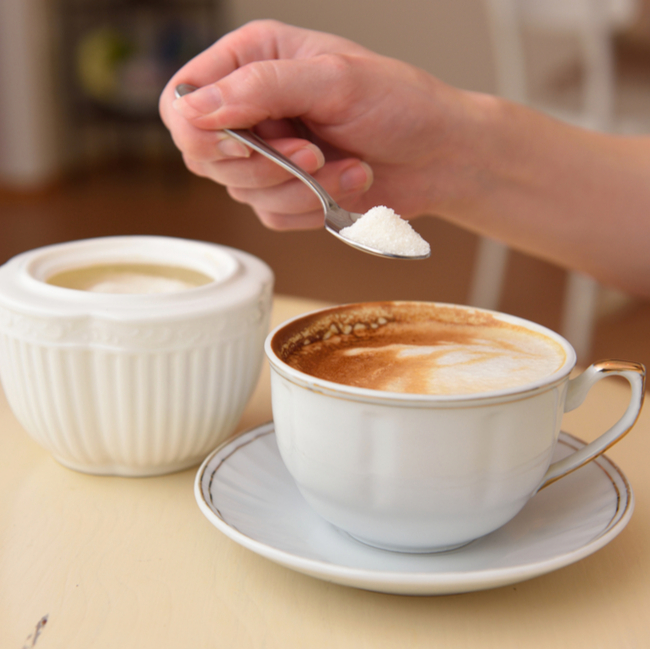
And when you consider just how much sugar goes into your favorite coffee drink, you’ll want to think twice before ordering it so often. Burdeos lays it all out for us: “For reference, the American Heart Association recommends no more than 36g sugar (9 teaspoons) per day for men and 24 grams of sugar (6 teaspoons) per day for women. A medium to large coffee with added sugar can contain up to about 15 to 20 grams of sugar,” she says. On second thought, maybe black coffee isn’t so bad.
In fact, Best says that “black coffee is best for weight loss” and points out that, in some cases, “caffeine can improve weight loss efforts.” That’s good news for anyone who can handle the bitterness! But if you really can’t bear to take your black coffee, Burdeos offers some advice: “I recommend making your own coffee at home where you have total control of the ingredients you add.” Keep in mind that it’s always best to go with natural sweeteners–it will definitely pay off in the end.
READ MORE:
Experts Agree: This Is The One Ingredient You Should Stop Putting In Your Coffee (It Causes Inflammation!)
Dietitians Say This Is The Morning Drink You Should Be Having Instead Of Coffee For Better Digestion
; if (!f._fbq)f._fbq = n; n.push = n; n.loaded = !0; n.version = '2.0'; n.queue = []; t = b.createElement(e); t.async = !0; t.src = v; s = b.getElementsByTagName(e)[0]; s.parentNode.insertBefore(t, s) }(window, document, 'script', '//connect.facebook.net/en_US/fbevents.js');
fbq('init', '1230911863589528'); fbq('track', "PageView"); … Read More
 Gut health affects your skin too (Source: Getty Images/Thinkstock)